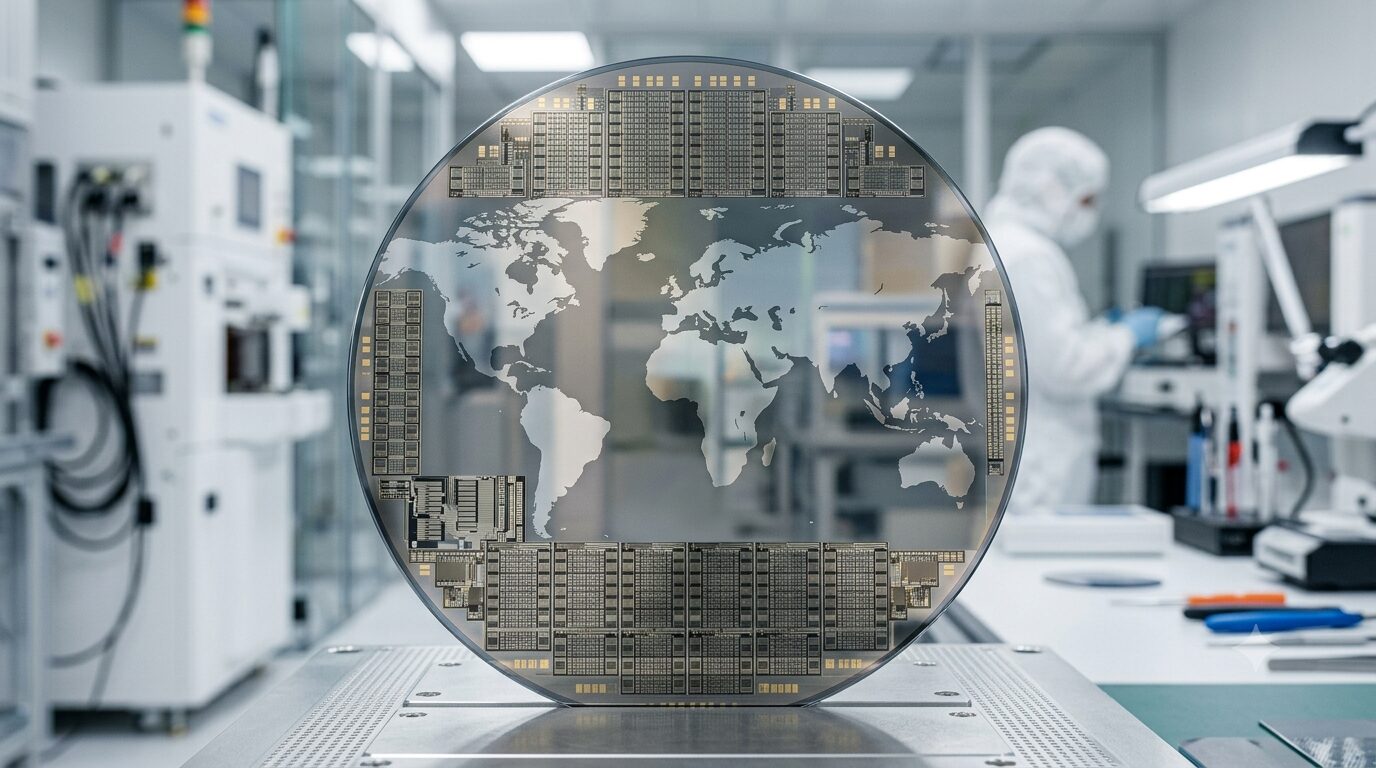
South Korea, a nation synonymous with technological innovation, is making headlines once again with a monumental Korean tech investment exceeding $550 billion, poised to reshape the global semiconductor landscape and avert a potential ‘RAMageddon’. For anyone tracking global tech trends, or simply curious about the engine driving their smartphones and AI advancements, this colossal commitment from South Korea’s industrial titans, Samsung and SK Hynix, is far more than just a financial figure. It’s a strategic declaration that underscores Korea’s indispensable role in the world’s digital future and promises to stabilize a critical supply chain that touches every aspect of modern life.
South Korea: The Unseen Architect of Our Digital World
While brands like Apple, Google, and Nvidia often grab the spotlight, the truth is, much of the foundational technology powering these giants originates from a handful of highly specialized companies, many of which call South Korea home. When we talk about memory chips – specifically DRAM (Dynamic Random-Access Memory) and NAND flash memory – South Korean companies, primarily Samsung Electronics and SK Hynix, are the undisputed global leaders. These aren’t just components; they are the literal memory and storage capacity that allows your computer to run multiple applications, your smartphone to store thousands of photos, and massive data centers to power the cloud and AI algorithms.
Without a stable, innovative supply of these crucial semiconductors, the global tech ecosystem would grind to a halt. This dominance isn’t accidental; it’s the result of decades of strategic national investment, relentless research and development, and a culture of continuous innovation. South Korea has meticulously built an infrastructure and expertise that makes it irreplaceable in the semiconductor world, a fact that becomes increasingly clear with every new technological leap.
What is ‘RAMageddon’ and Why Should We Care?
The term ‘RAMageddon’ might sound dramatic, but it succinctly captures a very real concern for the global tech industry. Essentially, it refers to a potential catastrophic disruption in the supply or extreme volatility in the pricing of RAM and other memory chips. We’ve seen glimpses of this potential future during recent global supply chain crises, where shortages of even minor components could halt entire production lines for everything from cars to gaming consoles.
A true ‘RAMageddon’ scenario could stem from several factors: geopolitical tensions impacting trade routes, natural disasters striking key manufacturing hubs, or even a sudden, unprecedented surge in demand (think the explosive growth of AI and large language models) that outstrips current production capacity. The implications are staggering:
- Higher Prices for Consumers: Your next smartphone, laptop, or even smart appliance could become significantly more expensive.
- Innovation Stalled: Companies relying on these chips for new products and services would face delays, impacting everything from autonomous vehicles to medical devices.
- Economic Instability: Entire industries could be affected, leading to job losses and broader economic downturns globally.
- Geopolitical Vulnerability: Nations become more reliant on a few key suppliers, creating potential points of leverage and weakness.
South Korea’s proactive investment is a direct response to this looming threat, aiming to fortify the supply chain against such vulnerabilities and ensure the continued, smooth progress of technological advancement worldwide.
Understanding the Scale of Korean Tech Investment
The commitment of over $550 billion is not just a large number; it represents one of the most significant industrial investments in recent history. To put it into perspective, this sum is larger than the GDP of many medium-sized countries. This massive capital injection is slated to be deployed over several years, primarily by Samsung Electronics and SK Hynix, and will encompass a broad spectrum of initiatives:
- New Fabrication Plants (Fabs): Building cutting-edge facilities capable of producing the next generation of memory chips with greater efficiency and smaller geometries. These fabs are incredibly expensive, requiring billions of dollars each to construct and equip.
- Research and Development (R&D): Investing heavily in future technologies, including advanced packaging, high-bandwidth memory (HBM) crucial for AI, and next-generation materials science. This ensures Korea remains at the forefront of innovation.
- Talent Development: Training and recruiting a new generation of engineers, scientists, and skilled technicians to operate these complex facilities and drive future R&D. This addresses a critical global shortage of semiconductor talent.
- Infrastructure and Ecosystem Building: Enhancing the entire supply chain, from raw material suppliers to equipment manufacturers, creating a more robust and resilient ecosystem within South Korea.
This isn’t merely about increasing output; it’s about pushing the boundaries of what’s possible in semiconductor technology, ensuring higher performance, greater energy efficiency, and more reliable supply for the global market.
Global Implications: A Pillar of Stability and Innovation
For a global audience interested in South Korea, this investment carries profound meaning beyond mere corporate spending. It solidifies South Korea’s position as an indispensable pillar of global economic stability and technological progress. In an increasingly interconnected world, where every gadget and digital service relies on a complex web of components, securing the memory chip supply chain is paramount.
This commitment by South Korean giants will:
- Stabilize Global Supply Chains: By increasing capacity and diversifying production capabilities, it reduces the risk of future shortages and price spikes, benefiting manufacturers and consumers worldwide.
- Fuel Future Technologies: The R&D component of this investment will directly accelerate advancements in artificial intelligence, quantum computing, autonomous driving, 5G/6G networks, and the Internet of Things (IoT). These innovations depend heavily on more powerful and efficient memory.
- Reinforce Korea’s Economic Leadership: This strategic move strengthens South Korea’s economy, attracting further foreign investment, fostering job growth, and cementing its reputation as a global technology superpower. It underscores the nation’s commitment to being a reliable partner in the global tech landscape.
- Influence Geopolitical Dynamics: By maintaining a strong lead in critical semiconductor technology, South Korea enhances its strategic importance on the world stage, navigating complex international relations with greater resilience.
Ultimately, this isn’t just about South Korean companies making money; it’s about South Korea playing a crucial role in shaping the future of global technology and ensuring that the digital age continues its rapid, transformative march forward without being hampered by fundamental component shortages.
Beyond the Chips: A Look at Korea’s Vision
This half-trillion-dollar commitment is also a reflection of South Korea’s broader national vision. The nation has long understood that its economic prosperity is tied to its ability to innovate and lead in high-tech industries. From shipbuilding to automobiles, and now to semiconductors and beyond, Korea has consistently aimed for global leadership. This investment is a bold step to not just maintain, but significantly expand, that leadership in the most critical sector of the 21st century economy.
For those fascinated by Korea, this news offers a deeper insight into the country’s strategic thinking and its drive for excellence. It demonstrates a forward-looking approach, anticipating future needs and challenges, and making massive, calculated bets to secure its position and contribute to global progress.
Conclusion: South Korea’s Unwavering Commitment to the Future
The staggering $550 billion Korean tech investment from South Korean tech giants is more than just a headline-grabbing figure; it’s a profound declaration of intent. It signifies an unwavering commitment to innovation, stability, and leadership in the global semiconductor industry. For consumers, this means a more reliable supply of advanced gadgets and technologies. For businesses, it promises a more predictable and robust supply chain. And for the world, it reinforces South Korea’s indispensable role as a technological powerhouse, actively working to avert potential crises like ‘RAMageddon’ and pave the way for an even more connected and intelligent future. As the digital age continues to unfold, South Korea remains firmly at its helm, steering progress for us all.
Source: original article
The gameplay is so addictive and the rewards are actually attainable. I am loving the current event at bd7e777game.