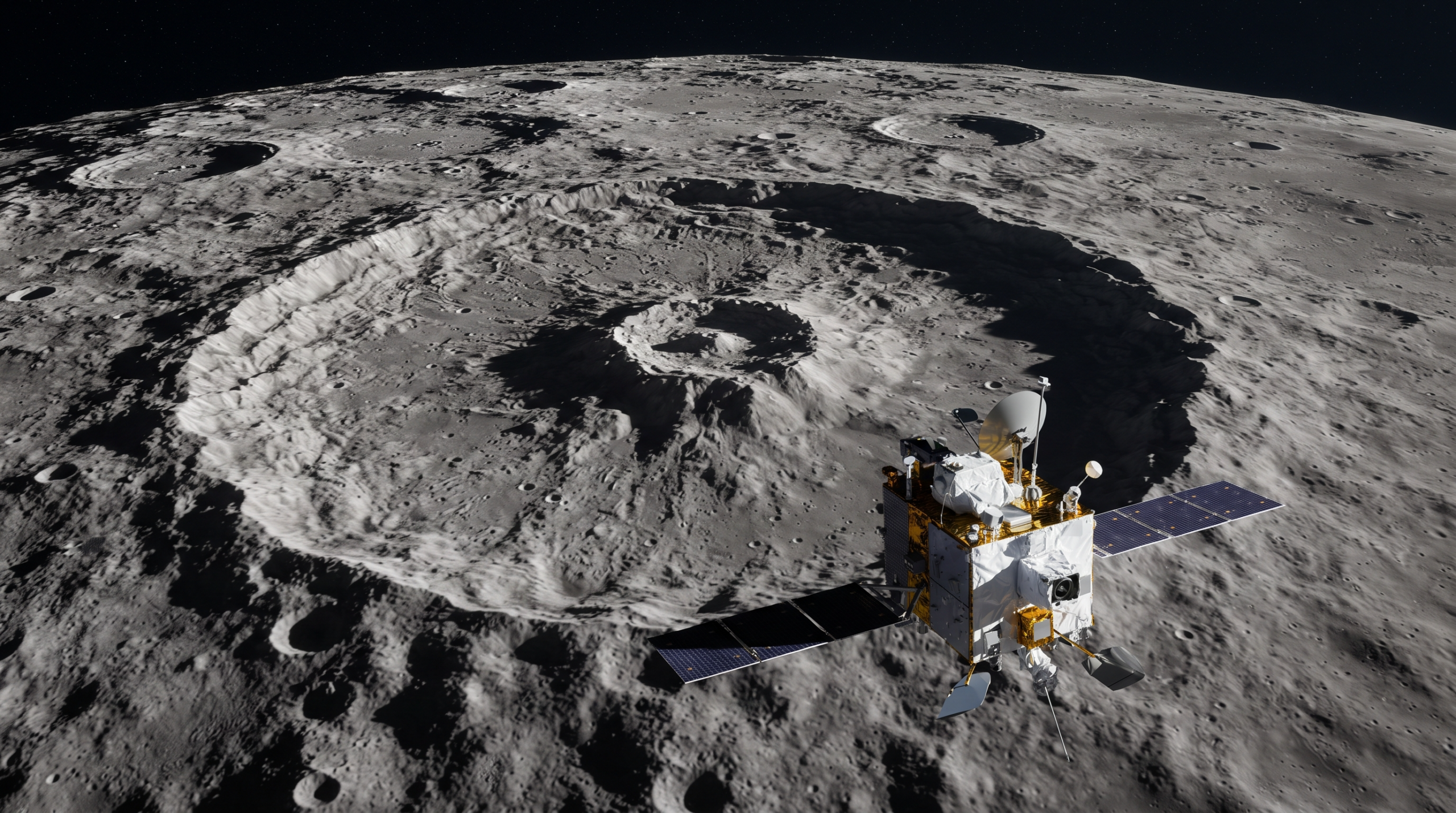
In a groundbreaking revelation that has captivated the scientific community and stargazers alike, NASA has announced the discovery of a new moon crater that dwarfs even the mighty Roman Colosseum. This isn’t just another pockmark on our celestial neighbor; it’s a colossal scar, a testament to the violent history of our solar system, and a potential goldmine of scientific insight. For a global audience, this discovery isn’t just about a hole in the ground far away; it’s a thrilling reminder of the dynamic universe we inhabit and humanity’s relentless quest to understand it.
The Moon’s Ancient Storytellers: What Craters Reveal
Our Moon, often seen as a serene companion in the night sky, is in fact a silent archive of the solar system’s tumultuous past. Its surface is peppered with billions of craters, each one a testament to an ancient impact from asteroids, comets, or meteoroids. Unlike Earth, which has a protective atmosphere and active geological processes (like erosion and plate tectonics) that erase such scars over time, the Moon’s airless, geologically inert surface preserves these impact features almost indefinitely.
These lunar scars are more than just topographical curiosities; they are invaluable scientific tools. By studying their size, depth, shape, and distribution, scientists can piece together the Moon’s bombardment history, estimate its age, and even infer details about its internal structure. Large impacts, in particular, can excavate material from deep beneath the surface, bringing up ancient rocks and minerals that offer clues about the Moon’s formation and evolution.
Unveiling the New Moon Crater: A Window to the Past
The latest discovery, made by a diligent NASA spacecraft (likely the Lunar Reconnaissance Orbiter, which has been meticulously mapping the lunar surface for over a decade), highlights the ongoing surprises our Moon holds. This particular new moon crater is not merely large; it is monumental, significantly exceeding the dimensions of Rome’s iconic Colosseum. While specific details about its exact location and precise measurements are still being analyzed and shared, the initial reports emphasize its impressive scale and the scientific potential it represents.
Scientists believe this newly identified crater is likely ancient, a relic from the early days of the solar system when impacts were far more frequent and energetic. Its pristine condition, despite its age, offers a unique opportunity to study the characteristics of large impacts without the degradation seen on other planetary bodies. This crater could provide fresh insights into the materials that make up the lunar crust and mantle, potentially revealing secrets about the Moon’s composition and how it has changed over billions of years.

A Cosmic Comparison: The Colosseum and Beyond
To truly grasp the magnitude of this discovery, it helps to put its size into perspective. The Roman Colosseum, an architectural marvel and one of humanity’s most enduring structures, stands as a symbol of ancient engineering and grandeur. Now, imagine an astronomical feature on the Moon that could comfortably encompass this entire historical landmark – and then some. This comparison isn’t just for shock value; it’s a powerful way to visualize the immense forces at play in space and the sheer scale of cosmic events.
The impact that created such a massive crater would have been cataclysmic, releasing an unfathomable amount of energy. Understanding these colossal impacts helps us comprehend the violent origins of planets and moons, and even to assess potential future threats to Earth. It’s a humbling reminder of the raw power of the universe and how fragile our existence can be.
Why This Discovery Matters for Humanity
Beyond the immediate awe, this discovery holds profound implications for several scientific and exploratory endeavors.
Advancing Lunar Geology and Evolution
- Understanding Lunar History: This crater acts as a new data point in the Moon’s geological timeline. Its characteristics can help refine models of lunar bombardment, providing a clearer picture of how impacts shaped the Moon and, by extension, other rocky bodies in the inner solar system.
- Probing Deeper Layers: Very large impact events can excavate material from deep within the Moon’s crust, and potentially even its mantle. Studying the exposed materials in and around this new crater could offer unprecedented insights into the Moon’s internal composition and structure, which are crucial for understanding its formation and evolution.
Paving the Way for Future Missions
- Future Exploration Targets: Such a significant geological feature could become a prime target for future robotic or even human missions. Exploring its interior could yield invaluable samples and allow for on-site geological analysis.
- Resource Potential: While not immediately obvious, large craters can sometimes harbor resources. For instance, permanently shadowed regions within deep craters near the poles are known to trap water ice. While the location of this specific crater isn’t detailed, understanding crater formation is vital for future resource prospecting and the establishment of lunar bases.
Inspiring the Next Generation
Every new discovery, especially one as tangible and awe-inspiring as a crater larger than the Colosseum, serves to ignite curiosity. It reminds us that there is still so much to learn and explore beyond our home planet. Such findings are crucial for inspiring young minds to pursue careers in science, technology, engineering, and mathematics (STEM), ensuring the continuation of humanity’s journey of discovery.
NASA’s Relentless Pursuit of Lunar Secrets
This discovery is a testament to NASA’s enduring commitment to lunar exploration. From the pioneering Apollo missions that first put humans on the Moon to the sophisticated robotic orbiters and landers of today, NASA has consistently pushed the boundaries of our understanding of Earth’s closest celestial neighbor. Missions like the Lunar Reconnaissance Orbiter (LRO) continue to provide high-resolution imagery and data, meticulously mapping the lunar surface and uncovering details previously unimagined.
The insights gained from these missions are not just about academic knowledge; they are foundational for future endeavors, including the ambitious Artemis program, which aims to return humans to the Moon and establish a sustainable long-term presence. Each crater identified, each anomaly investigated, brings us closer to making these grand visions a reality.
Conclusion
The discovery of a moon crater larger than the Roman Colosseum is more than just a headline; it’s a profound moment in our ongoing exploration of the cosmos. It reminds us of the Moon’s violent past, its role as a cosmic historian, and its continued relevance to our understanding of the universe. As technology advances and our instruments become ever more precise, the Moon continues to reveal its secrets, inviting us to look up, wonder, and explore. This new crater isn’t just a pit on the Moon; it’s a beacon, guiding us to deeper questions and inspiring humanity’s next giant leap.
Source: original article
Great platform with a very intuitive layout. I love how easy it is to navigate through the different sections. asiabetlogin makes everything so much simpler for the user.