Recent headlines from Portland, Oregon, detailing multiple instances of measles exposure at hospitals, urgent care centers, and even a trampoline park, serve as a stark reminder that this highly contagious disease is far from eradicated. While these specific incidents occurred in the Pacific Northwest, they underscore a growing global concern: the re-emergence of measles in communities worldwide, threatening public health and challenging decades of progress in disease control. For a broad international audience, understanding measles, its risks, and prevention is more crucial than ever.
Understanding Measles: A Highly Contagious Threat
Measles, caused by a virus in the paramyxovirus family, is one of the most contagious diseases known to humankind. Before the widespread introduction of the measles vaccine in 1963, major epidemics occurred every 2–3 years, causing an estimated 2.6 million deaths each year globally. Even today, despite significant strides in vaccination, measles remains a leading cause of death among young children worldwide, particularly in developing countries.
The virus spreads through respiratory droplets released when an infected person coughs or sneezes. What makes it particularly insidious is its airborne nature: the virus can linger in the air or on surfaces for up to two hours after an infected person has left the area. An unvaccinated person who is exposed has a 90% chance of contracting the disease. This incredibly high transmissibility is why even small pockets of unvaccinated individuals can lead to outbreaks.
Symptoms typically appear 7-14 days after exposure and include a high fever, cough, runny nose, and red, watery eyes (conjunctivitis). Tiny white spots with bluish-white centers on a red background, known as Koplik’s spots, may appear inside the mouth. A characteristic rash, starting on the face and neck and spreading downwards, usually follows these initial symptoms a few days later. While often considered a childhood disease, measles can affect anyone and can lead to severe complications.
The Serious Complications of Measles
Far from being a harmless childhood rite of passage, measles can lead to severe health issues, particularly in infants and those with compromised immune systems. These complications include:
- Pneumonia: A serious lung infection, it is the most common cause of death from measles in young children.
- Encephalitis: Inflammation of the brain, which can cause convulsions, deafness, or intellectual disability. This rare but severe complication can occur immediately after measles or even years later (Subacute Sclerosing Panencephalitis – SSPE).
- Ear Infections: Can lead to permanent hearing loss.
- Diarrhea and Severe Dehydration: Especially dangerous for infants and young children.
- Blindness: Particularly in individuals with vitamin A deficiency.
These potential outcomes highlight why public health officials take every reported case and exposure seriously. The economic burden on healthcare systems during outbreaks is also substantial, as resources are diverted to manage cases, conduct contact tracing, and implement emergency vaccination campaigns.
Measles Exposure: Why the MMR Vaccine is Your Best Defense
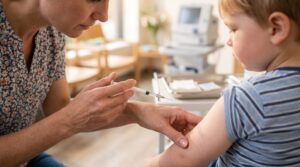
The good news is that measles is almost entirely preventable through vaccination. The Measles, Mumps, and Rubella (MMR) vaccine is highly effective and safe. Two doses of the MMR vaccine are about 97% effective at preventing measles, while one dose is about 93% effective. This level of protection is crucial not just for the vaccinated individual, but for the entire community.
This concept is known as herd immunity. When a large percentage of the population is vaccinated, it creates a protective barrier that makes it difficult for the disease to spread. This protects those who cannot be vaccinated, such as infants too young to receive the vaccine, pregnant women, and individuals with weakened immune systems due to medical conditions or treatments. Unfortunately, declining vaccination rates in some regions, often fueled by misinformation, have eroded this protective barrier, leading to the re-emergence of measles in countries that had previously declared the disease eliminated.
The recent Portland exposures serve as a stark warning. When vaccination rates drop below the critical threshold (typically 95% for measles), outbreaks become inevitable, and vulnerable individuals are put at grave risk. Public health experts worldwide are sounding the alarm, urging communities to prioritize vaccination to prevent a global resurgence of this preventable disease.
What to Do If You Suspect Measles Exposure
If you believe you or someone you know has been exposed to measles, especially in locations identified by health officials, it’s crucial to act quickly and responsibly:
- Contact Your Doctor Immediately: Do not go directly to a clinic or hospital without calling ahead. This allows healthcare providers to take precautions to prevent further spread to other patients and staff.
- Check Vaccination Status: Ensure you and your family are up-to-date on your MMR vaccinations. Your doctor can help you determine if you need a booster or an initial vaccination.
- Monitor for Symptoms: Be vigilant for the signs of measles for up to 21 days after exposure.
- Self-Isolate: If you develop symptoms, stay home and avoid contact with others to prevent spreading the virus.
For individuals who are unvaccinated and exposed to measles, a post-exposure vaccine can sometimes be administered within 72 hours to prevent illness or lessen its severity. Immune globulin may also be given to highly vulnerable individuals.
Global Implications and a Call to Action
The Portland measles exposures are not isolated incidents; they mirror similar outbreaks occurring in various parts of the world, from Europe to Asia and Africa. In our increasingly interconnected world, where international travel is common, a disease outbreak in one region can quickly become a global concern. The World Health Organization (WHO) continuously monitors measles activity, warning against complacency and stressing the vital role of sustained high vaccination coverage.
For individuals, the call to action is clear: ensure you and your loved ones are fully vaccinated against measles. For communities and governments, it means supporting public health initiatives, providing accurate information, and ensuring equitable access to vaccines for everyone. Protecting ourselves and those around us from measles is a shared responsibility, a testament to the power of collective action in safeguarding global health.
Source: original article