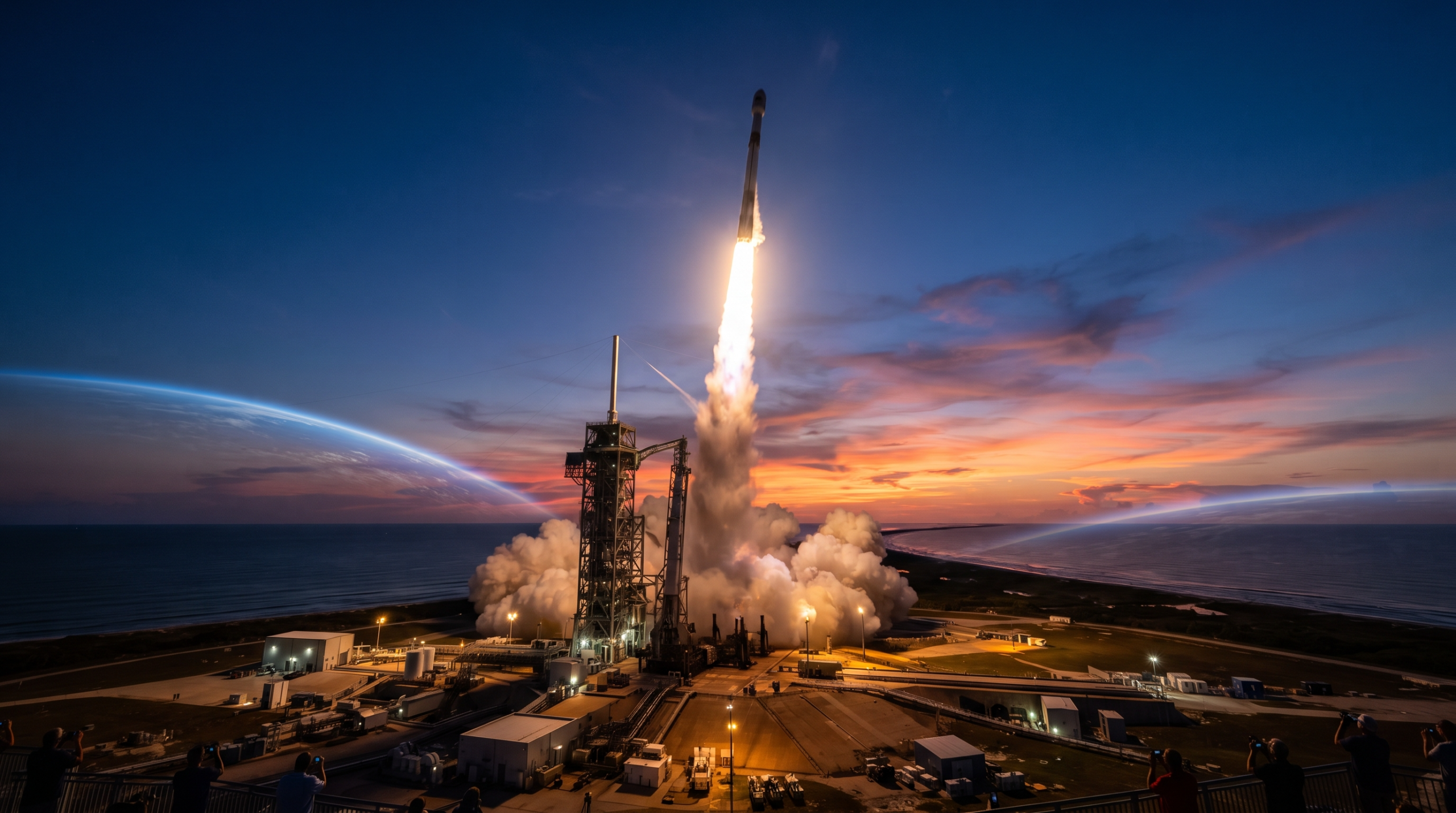
The recent 700th SpaceX Falcon mission marks a truly astonishing milestone in humanity’s quest to conquer space and, more importantly, to connect our world like never before. This isn’t just about rockets soaring into the sky; it’s about the relentless pursuit of innovation that’s bringing high-speed internet to the farthest corners of the globe, transforming lives and opening up unprecedented opportunities for billions. For a broad international audience like ours, understanding the implications of such achievements is crucial, as they directly impact how we live, work, and communicate every single day.
The Unstoppable Rise of the SpaceX Falcon Mission
Seven hundred launches. Let that number sink in for a moment. In the grand, ambitious history of spaceflight, such a figure from a single rocket family is nothing short of revolutionary. The Falcon rocket family, primarily consisting of the Falcon 9 and the heavier Falcon Heavy, has fundamentally reshaped our access to space. Before SpaceX, launching anything into orbit was an astronomically expensive and time-consuming endeavor, often fraught with delays and the inherent risk of a single-use rocket.
What makes this 700th launch so significant isn’t just the sheer volume, but the method behind it. SpaceX pioneered and perfected the concept of reusable rocket boosters. Imagine an airplane that could only fly once. That’s what rockets were for decades. Now, Falcon 9 first stages routinely land back on Earth, either at a designated landing zone or on autonomous drone ships at sea, ready to be refurbished and fly again. This reusability has driven down the cost of space launches dramatically, making space more accessible for governments, private companies, and even universities around the world. It has accelerated the pace of innovation, allowing for more frequent missions and the deployment of massive satellite constellations that were once just science fiction.
More Than Just Numbers: What 700 Launches Means for Everyone
Beyond the impressive statistics, the 700th Falcon mission symbolizes a paradigm shift. It represents:
- Unprecedented Reliability: Consistently delivering payloads to orbit with a remarkable success rate. This reliability builds trust and encourages more investment in space-based technologies.
- Economic Accessibility: By drastically reducing launch costs, SpaceX has opened up space for a wider array of ventures, from scientific research to commercial satellite services and even space tourism. This creates jobs, stimulates economies, and fosters global competition.
- Accelerated Innovation: The rapid launch cadence means that new technologies can be tested and deployed faster, speeding up the development cycle for everything from Earth observation to global communications.
- Environmental Responsibility: Reusability isn’t just about cost; it’s also about sustainability. Fewer rockets ending up as space debris means a cleaner, safer orbital environment for future generations.
Connecting the Unconnected: The O3b mPOWER Satellites
The specific payload on this historic 700th launch highlights another critical aspect of SpaceX’s impact: global connectivity. The mission carried three O3b mPOWER satellites for SES, a leading global satellite operator. These aren’t just any satellites; they are part of a next-generation constellation designed to provide high-throughput, low-latency connectivity services across the globe.
What does that mean in plain terms? Imagine living in a remote village, far from any fiber optic cables or cellular towers, where internet access is either non-existent or painfully slow. The O3b mPOWER system aims to change that. These advanced satellites operate in a medium Earth orbit (MEO), closer to Earth than traditional geostationary satellites, which significantly reduces the signal delay (latency). This makes the internet experience much more responsive, similar to what you’d find in a well-connected city.
The “mPOWER” in their name stands for “multi-orbit, programmable, optimized, and resilient.” These satellites are incredibly flexible, capable of dynamically allocating bandwidth to specific regions based on demand. This means they can provide gigabits of internet speed to ships at sea, planes in the air, humanitarian aid efforts in disaster zones, or businesses and communities in underserved regions. For millions, this isn’t just about faster Netflix; it’s about access to education, healthcare, economic opportunities, and vital information that can literally save lives.
Beyond Borders: How Satellite Internet Bridges the Digital Divide
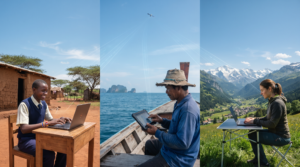
The digital divide—the gap between those who have access to modern information and communications technology and those who don’t—is a profound global challenge. Satellite internet, spearheaded by constellations like O3b mPOWER and Starlink, is emerging as a powerful solution. Here’s why it matters to you, no matter where you are:
- Empowering Remote Communities: For communities that are too expensive or difficult to connect with traditional ground infrastructure, satellite internet offers a lifeline. This can transform local economies, allow for remote work, and provide access to global markets.
- Enabling Education: Students in isolated areas can access online learning resources, connect with educators worldwide, and gain skills essential for the 21st century.
- Improving Healthcare: Telemedicine becomes a reality, allowing doctors to consult with patients in rural areas, facilitate remote diagnostics, and deliver critical health information.
- Enhancing Disaster Response: When terrestrial communication networks are destroyed by natural disasters, satellite systems can quickly restore vital connectivity for first responders and affected populations.
- Boosting Global Commerce: Businesses, from small startups to large corporations, can operate more efficiently and reach wider audiences, fostering economic growth across continents.
The Future is Now: What’s Next for Space Exploration and Connectivity
The 700th SpaceX Falcon mission is not an endpoint, but a powerful indicator of the trajectory we’re on. We are living in an era where space is no longer solely the domain of superpowers, but a rapidly expanding frontier for global enterprise and human progress. As more satellites go online, and as other companies join the race to provide space-based connectivity, we can expect even more widespread and affordable internet access for everyone.
Looking ahead, SpaceX continues to push boundaries with its Starship program, aiming for even greater reusability and capabilities to reach the Moon and Mars. These advancements, while seemingly distant, are all part of an interconnected ecosystem that will continue to drive down costs, increase access, and ultimately, bring the benefits of space technology closer to home for billions of people around the world. The rockets soaring skyward are not just carrying hardware; they are carrying the promise of a more connected, more equitable future for humanity.
The 700th SpaceX Falcon mission is more than just a historical marker; it’s a launchpad into a future where geographical barriers mean less and less for connectivity. As these powerful rockets continue to ascend, they carry with them not just satellites, but the hopes and dreams of a truly interconnected global community. The sky is no longer the limit; it’s the beginning of a new chapter for humanity.
Source: original article