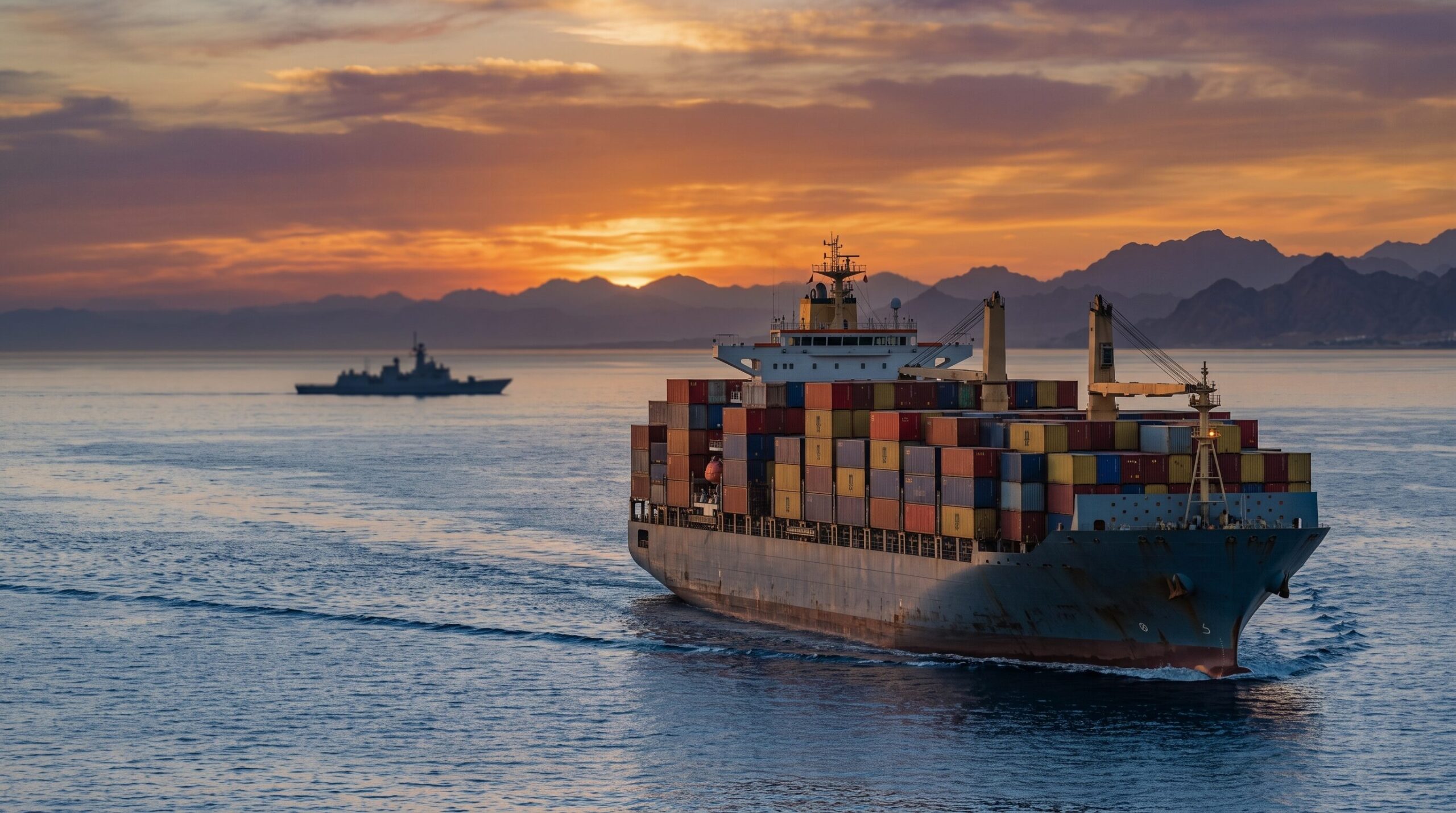
The global maritime landscape is currently gripped by a burgeoning crisis in the Red Sea, a vital artery for international trade. Recent Red Sea attacks by Houthi rebels in Yemen have escalated tensions dramatically, prompting strong condemnations and vows of reprisal from international powers, notably former U.S. President Donald Trump, who has pledged decisive action against both the Houthis and their alleged backer, Iran. This isn’t just a regional squabble; it’s a conflict with far-reaching implications, threatening to disrupt global supply chains, drive up energy costs, and reshape geopolitical alliances.
The Red Sea Attacks: A Critical Chokepoint Under Siege
The Red Sea, connecting the Indian Ocean to the Mediterranean via the Suez Canal, is one of the world’s most critical maritime chokepoints. Roughly 12% of global trade, including a significant portion of the world’s oil and natural gas, passes through its narrow waters daily. It’s an indispensable route for goods traveling between Asia and Europe. The recent surge in attacks by Yemen’s Houthi movement on commercial vessels navigating these waters has transformed this crucial trade artery into a dangerous flashpoint. These assaults, involving drones and missiles, have targeted ships with perceived links to Israel, the United States, or other Western nations, ostensibly in solidarity with Palestinians in Gaza.
Who are the Houthis and Why the Red Sea?
The Houthis, officially known as Ansar Allah, are an Iran-aligned Zaidi Shia Islamist political and military organization that controls much of western Yemen. They rose to prominence during the Yemeni civil war, establishing a de facto government in Sana’a. Their declared motivation for the Red Sea attacks is to pressure Israel to end its military operations in Gaza. By targeting commercial shipping in one of the world’s busiest maritime corridors, they aim to inflict economic pain and generate international pressure. Their strategic location along the Bab el-Mandeb Strait, the narrow southern entrance to the Red Sea, gives them a powerful lever to disrupt global trade.
Iran’s Role: The Shadowy Hand?
While the Houthis claim independent decision-making, their deep ties to Iran are widely acknowledged by international observers. Iran has long supported the Houthi movement with weapons, training, and financial aid, viewing them as a key proxy in its regional struggle for influence against Saudi Arabia and the United States. Tehran denies direct involvement in ordering the Red Sea attacks but has expressed tacit approval and ideological solidarity. The extent of Iran’s operational control over the Houthi attacks is a subject of intense debate, but there’s little doubt that Iranian support has enabled the Houthis to develop the capabilities needed to launch such sophisticated assaults. For many, Iran’s alleged role transforms the Red Sea crisis into another proxy front in the broader U.S.-Iran geopolitical rivalry.

Global Ramifications: Why the Red Sea Attacks Matter to You
The repercussions of the Red Sea attacks extend far beyond the immediate conflict zone, touching every corner of the global economy and international relations.
Economic Ripples: Shipping, Oil, and Your Wallet
The most immediate and tangible impact is on global shipping. Major shipping companies, including industry giants like Maersk and MSC, have rerouted their vessels away from the Red Sea and around the Cape of Good Hope, a significantly longer and more expensive journey. This detour adds thousands of nautical miles and weeks to transit times, increasing fuel costs, insurance premiums, and labor expenses. These added costs are inevitably passed on to consumers, potentially driving up prices for a vast array of imported goods, from electronics and clothing to food and raw materials.
Furthermore, the Red Sea is a crucial conduit for oil and natural gas shipments, particularly from the Middle East to Europe. Any significant disruption here can lead to spikes in energy prices, impacting everything from manufacturing costs to the price at the gas pump. The uncertainty created by the attacks also makes financial markets nervous, potentially leading to broader economic instability.
Geopolitical Chessboard: US, Allies, and Regional Stability
The crisis also has profound geopolitical implications. The United States and its allies have responded by forming a naval coalition, Operation Prosperity Guardian, aimed at protecting commercial shipping in the Red Sea. This deployment of military assets underscores the gravity of the situation and the international community’s determination to keep this vital waterway open. However, it also raises the risk of direct confrontation with the Houthis and, by extension, potentially Iran, further destabilizing an already volatile Middle East.
The ongoing tensions threaten to ignite another theater in the broader U.S.-Iran standoff, with the potential for miscalculation leading to a wider regional conflict. The situation tests the resolve of international alliances and could reshape strategic partnerships in the region as nations weigh their interests and responses.
What Could Punishment Look Like? Trump’s Stance and Potential Responses
Donald Trump’s recent vows to “punish Iran and Houthis” for the Red Sea attacks signal a potentially more aggressive approach should he return to the presidency. While the specific nature of such punishment remains speculative, drawing from his past foreign policy decisions and current rhetoric, several possibilities emerge.
During his previous term, Trump pursued a “maximum pressure” campaign against Iran, involving stringent economic sanctions and a willingness to authorize targeted military strikes in response to perceived provocations. A renewed focus on punishment could involve:
- Expanded Sanctions: Intensifying economic sanctions against Iran, targeting its oil exports, financial institutions, and individuals linked to its proxy networks. Similar sanctions could be applied to Houthi leadership and entities.
- Military Retaliation: Authorizing more robust military responses to Houthi attacks, potentially including strikes against Houthi missile and drone launch sites, command centers, or even their naval capabilities. This could be a significant escalation from current defensive operations.
- Direct Confrontation with Iran: A more assertive posture towards Iran itself, possibly involving direct military action against Iranian assets if credible evidence of direct Iranian operational involvement in the Red Sea attacks were presented and deemed a sufficient casus belli. This would carry significant risks of wider conflict.
- Increased Regional Pressure: Working to build a stronger regional coalition with Gulf states to counter Iranian influence and Houthi aggression, potentially involving increased military aid or joint exercises.
Such an approach would likely be met with strong reactions from adversaries and allies alike. While proponents might argue it restores deterrence, critics would warn of the dangers of escalation, further regional instability, and potential humanitarian consequences in Yemen. The international community would be closely watching to see how such a policy balances the need for maritime security with the imperative to avoid broader conflict.
Conclusion
The escalating crisis in the Red Sea is a stark reminder of the interconnectedness of our world. What began as regional attacks by the Houthis has quickly morphed into a global concern, impacting everything from shipping costs and energy prices to the delicate balance of international power. The prospect of further punitive actions, particularly from a potential future U.S. administration, adds another layer of complexity and uncertainty to an already volatile situation. For anyone interested in global economics, international security, or simply understanding the forces shaping our world, keeping an eye on the Red Sea attacks and the unfolding geopolitical responses is essential. This critical maritime chokepoint remains a focal point of tension, underscoring the fragility of global trade routes and the ever-present potential for regional conflicts to reverberate worldwide.
Source: original article