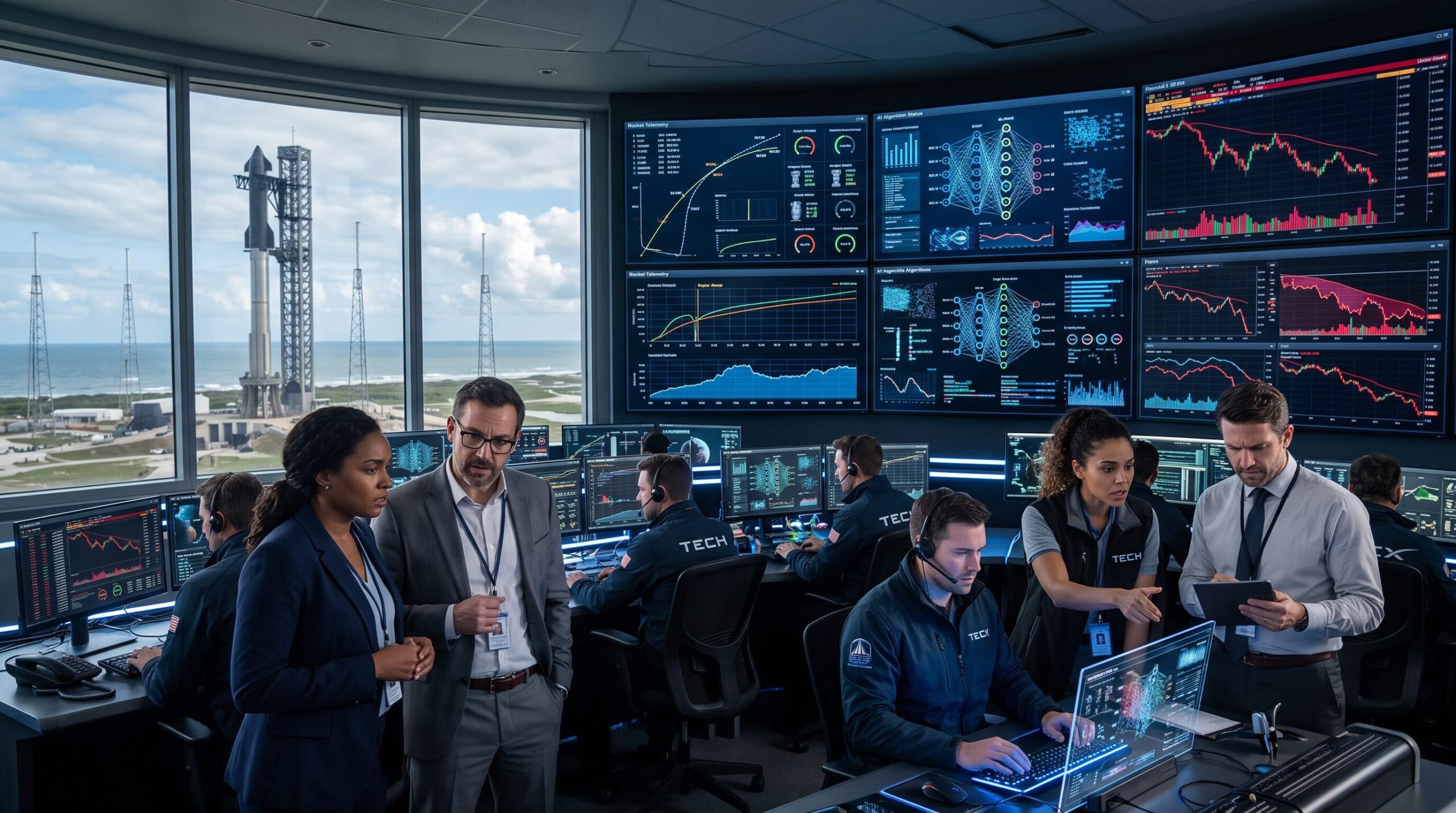
The latest financial reports from Elon Musk’s trailblazing aerospace company, SpaceX, have sparked significant discussion, primarily due to their substantial SpaceX AI spending. While the company continues to achieve impressive growth, its recent earnings call revealed aggressive investments in artificial intelligence, a move that has seemingly unnerved investors on Wall Street, despite promises of a quick payoff. This isn’t just about a company’s balance sheet; it’s a fascinating glimpse into the high-stakes game of innovation, where audacious long-term vision clashes with the market’s demand for immediate returns.

The AI Investment Juggernaut: Why SpaceX is Pouring Billions into AI
SpaceX, now a publicly traded entity, recently unveiled its Q2 financial results, showcasing a remarkable 92% jump in revenue. However, this impressive top-line growth was overshadowed by a significant increase in capital expenditure (CapEx), largely attributed to its burgeoning AI initiatives. For a company like SpaceX, AI isn’t a peripheral add-on; it’s becoming integral to virtually every facet of its operations, from optimizing satellite networks to enhancing rocket autonomy and even streamlining manufacturing processes.
Investing in AI at this scale means more than just hiring a few data scientists. It involves massive outlays for cutting-edge hardware, including powerful GPUs and the construction of vast data centers capable of processing astronomical amounts of information. It also entails attracting and retaining the world’s top AI talent, a fiercely competitive and expensive endeavor. This substantial financial commitment, while strategically vital for the future, translates into higher operating costs and, in the short term, can eat into profitability.
The Wall Street Jitters: Short-Term Pain vs. Long-Term Vision
Wall Street, with its quarterly earnings cycles and focus on immediate shareholder value, often views such large-scale, speculative investments with a degree of skepticism. While tech giants like Google and Amazon have historically reinvested heavily, a newly public company like SpaceX faces increased scrutiny. The market’s reaction, evidenced by a drop in its stock price despite strong revenue, highlights a fundamental tension:
- Reduced Immediate Profitability: High CapEx means lower net income in the short run, which can deter investors looking for quick returns.
- Uncertain Payoff: While AI promises revolutionary benefits, the exact timeline and magnitude of its financial returns are often difficult to predict, making it a riskier proposition for cautious investors.
- Market Volatility: In the current economic climate, investors are often wary of companies making huge, unproven bets, preferring stable growth over ambitious, potentially disruptive, but highly capital-intensive projects.
- Transparency Concerns: While SpaceX hints at “quick payoffs,” the specific applications and financial models supporting these claims might not be fully transparent enough for some analysts.
This isn’t necessarily a judgment on AI’s potential, but rather a reflection of the market’s innate desire for predictability and measurable short-term gains, especially from a company making its public debut.
What Exactly is SpaceX Doing with All That AI?
So, where exactly is all this AI investment going? The applications are incredibly diverse and crucial to SpaceX’s overarching mission:
- Starlink Network Optimization: AI is critical for managing the vast Starlink satellite constellation. It optimizes signal routing, predicts and mitigates outages, dynamically allocates bandwidth, and ensures seamless global internet coverage, especially in remote areas.
- Rocket Autonomy and Operations: From the Falcon 9 to the Starship, AI is enhancing autonomous flight control systems, optimizing launch windows, predicting potential failures, and automating pre-flight checks and post-flight analysis. This improves safety, efficiency, and reduces operational costs.
- Advanced Manufacturing: SpaceX leverages AI in its factories for everything from robotic assembly and quality control to predictive maintenance of machinery, accelerating production cycles for rockets and satellites.
- Mission Planning and Simulation: For ambitious projects like Mars colonization, AI can run complex simulations of planetary environments, resource utilization, and habitat construction, identifying optimal strategies and potential challenges long before human missions depart.
- Data Analysis for Space Exploration: As SpaceX gathers more data from its launches and orbital operations, AI tools are indispensable for sifting through massive datasets to extract insights, identify trends, and inform future designs and missions.
For a global audience, these applications aren’t just fascinating; they represent the frontier of human technological advancement. They promise cheaper, more reliable access to space, universal internet connectivity, and potentially, humanity’s multi-planetary future.

Elon Musk’s Bold Bets: A Pattern of Disruption and Delay
It’s impossible to discuss SpaceX’s strategic moves without acknowledging the influence of Elon Musk. Known for his audacious, long-term visions that often defy conventional wisdom, Musk has a track record of pursuing ambitious projects that initially face skepticism but eventually disrupt industries. Think of Tesla’s early struggles or the initial doubt surrounding reusable rockets. His philosophy often involves heavy, upfront investment in foundational technologies with the expectation of exponential returns down the line.
This approach, while often yielding groundbreaking results, also comes with inherent risks and can involve longer timelines than traditional investors might prefer. Wall Street’s current apprehension might simply be a familiar reaction to Musk’s characteristic “swing for the fences” strategy, especially when the immediate financial benefits aren’t crystal clear.
SpaceX AI Spending: Beyond the Balance Sheet – What This Means for Global Innovation
Regardless of short-term stock fluctuations, SpaceX’s aggressive AI investment has profound implications far beyond its balance sheet and for a global audience:
- Accelerating Space Exploration: More advanced AI means faster, safer, and potentially cheaper access to space, opening doors for scientific research, resource extraction, and even space tourism for everyone.
- Bridging the Digital Divide: An AI-optimized Starlink network can provide high-speed internet to remote and underserved populations worldwide, fostering economic growth and access to information.
- Pushing AI Boundaries: The challenges faced by SpaceX in space, manufacturing, and network management are unique. Solving these will inevitably lead to breakthroughs in AI technology that can then be applied across numerous other industries globally.
- Inspiring Future Generations: SpaceX’s ambitious goals, fueled by AI, inspire engineers, scientists, and entrepreneurs across the globe to pursue innovative solutions to humanity’s grandest challenges.
In conclusion, while Wall Street grapples with the immediate financial implications of SpaceX’s hefty AI investments, the bigger picture reveals a company betting big on the future. This tension between short-term investor expectations and long-term, transformative vision is a classic Silicon Valley story playing out on a cosmic scale. Whether SpaceX’s promise of a “quick payoff” materializes in a way that satisfies the market remains to be seen, but one thing is clear: the future of space exploration, powered by artificial intelligence, is being shaped today, and the world is watching.
Source: original article