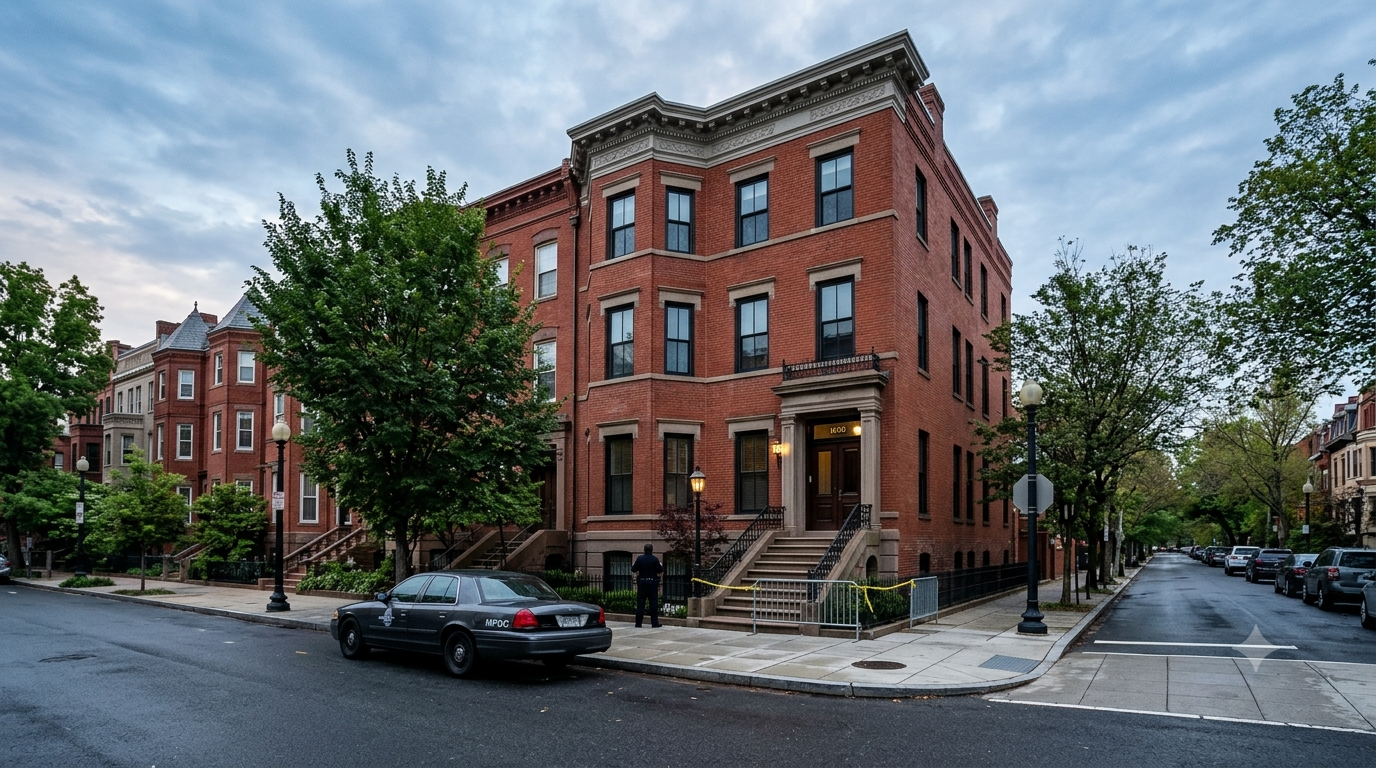
The news of a federal search at Representative Ilhan Omar’s Washington, D.C. home and her subsequent decision to move has ignited a fresh wave of discussions and scrutiny around the prominent congresswoman. This Omar home search has not only drawn significant attention within the United States but also echoes far beyond its borders, touching upon themes of political integrity, due process, and the intense polarization of modern politics. For a global audience, understanding the intricacies of this situation offers a window into the challenges faced by public figures and the mechanisms of accountability in democratic systems.

Unpacking the Omar Home Search: The Federal Raid and Its Aftermath
The pre-dawn raid on Congresswoman Ilhan Omar’s residence in Washington D.C. was, by all accounts, a dramatic and unsettling event. Reports from various news outlets indicate that federal agents executed a search warrant, though the specific nature of the investigation and the agencies involved were not immediately clear to the public. For a sitting member of Congress, such an action is exceptionally rare and naturally triggers a cascade of questions and concerns.
Omar herself described the raid as “bizarre” and intrusive, leading directly to her public announcement that she would be moving out of the home. She cited the profound sense of violation and the perceived targeting as reasons for her decision, emphasizing the disruption to her personal life and privacy. This response highlights the psychological impact such events can have, even on seasoned politicians accustomed to public scrutiny. The incident quickly became a top trending news item, fueling speculation and reigniting past controversies associated with the Minnesota representative.
Allegations Resurface: Identity and Immigration
Perhaps the most potent aspect of the renewed discussion surrounding Ilhan Omar stems from the resurfacing of long-standing allegations concerning her identity and immigration status. Fox News, among others, reported that sources claimed “Ilhan Omar” is not the congresswoman’s “real name,” suggesting potential immigration fraud. These allegations are not new; they have periodically surfaced throughout her political career, often pushed by conservative media and political opponents.
The core of these claims revolves around questions about her marriage history and whether she entered the U.S. under a different name or misrepresented facts during her immigration process. While Omar has consistently denied these allegations, dismissing them as politically motivated attacks and conspiracy theories, the federal search has undeniably provided a fresh platform for these accusations to gain traction once more. For an international audience, these discussions resonate deeply with global debates on immigration integrity, the challenges faced by refugees, and the often-fraught process of integration into new societies. The sensitivity around personal identity and legal status in immigration contexts makes these allegations particularly impactful, regardless of their veracity.

The Decision to Move: Privacy, Politics, and Personal Impact
Omar’s public statement that the federal search was forcing her to move out of her D.C. home speaks volumes about the psychological and practical toll such an event can take. While politicians are expected to live under public scrutiny, a pre-dawn raid by federal agents crosses a significant line, impacting personal safety, privacy, and the feeling of security within one’s own home.
Her decision can be interpreted in several ways. Firstly, it’s a personal response to an invasive experience, an attempt to reclaim a sense of normalcy and privacy. Secondly, it sends a message about the perceived harassment she faces as a prominent progressive voice and a Muslim woman of color in American politics. This move could also be a strategic one, aiming to mitigate further disruption to her family life and to draw attention to what she views as undue pressure. Regardless of the underlying motivations, her relocation underscores the intense pressures and often hostile environment that political figures, especially those who challenge the status quo, must navigate.
Political Reactions and the Global Echo Chamber
The news of the federal search and Omar’s response immediately became a political flashpoint. Former President Donald Trump quickly weighed in, calling for Omar to resign and defending a campaign ad by Vivek Ramaswamy at an Iowa rally. This reaction is typical of the highly partisan landscape of American politics, where any event involving a prominent figure is quickly absorbed into existing narratives and ideological battles.
For a global audience, this highlights how political events in one nation can quickly become fodder for international discourse. The allegations against Omar, the federal search, and the subsequent political commentary all feed into broader global conversations about immigration policies, the rise of populist nationalism, and the scrutiny faced by minority politicians. The speed with which information, and misinformation, can travel across borders via social media means that these domestic incidents have far-reaching implications, influencing perceptions of American democracy and its commitment to justice and fairness.
The Principle of Due Process and Public Trust
At the heart of any federal investigation, especially one involving a public official, lies the principle of due process. While the details of the search warrant remain undisclosed to the public, the very act of a federal raid implies a serious underlying investigation. For a healthy democracy, it is crucial that such processes are conducted fairly, transparently, and without political interference.
Conversely, the public’s trust in its institutions, including law enforcement and the judiciary, is paramount. When high-profile politicians are subjected to federal searches, it inevitably raises questions about whether the process is legitimate or politically motivated. This tension between the need for accountability and the potential for political weaponization is a delicate balance. International observers often look to such events as indicators of a nation’s rule of law and the independence of its justice system. The manner in which this situation unfolds will, therefore, have implications for how the world views the integrity of American political and legal institutions.
Why This Matters to a Global Audience
Beyond the immediate political drama, the Omar home search saga offers several crucial insights for a global audience. Firstly, it underscores the intense scrutiny and personal cost often borne by public figures, particularly those who are trailblazers or represent marginalized communities. Omar, as one of the first two Muslim women elected to Congress and a former refugee, often finds herself at the epicenter of cultural and political debates.
Secondly, it highlights the enduring power of allegations, even unproven ones, to impact political careers and public perception, especially in an era of rapid information dissemination and polarized media. This phenomenon is not unique to the US; it’s a global challenge for democracies grappling with misinformation and the weaponization of personal narratives.
Finally, the incident brings into focus fundamental questions about immigration, identity, and national belonging, themes that resonate deeply in nearly every country grappling with migration flows and diverse populations. How a nation investigates and treats its elected officials, particularly those from minority backgrounds, sends a powerful message about its values and the strength of its democratic principles. The global community watches not just for the outcome of any potential investigation, but for the integrity of the process itself.
Conclusion
The federal search of Representative Ilhan Omar’s home and her subsequent decision to relocate represent a significant moment in her already eventful political career. While the full details of the investigation remain under wraps, the incident has reignited debates around immigration, identity, and the intense scrutiny faced by public figures. For a global audience, this event serves as a potent reminder of the complexities inherent in modern politics, the delicate balance between accountability and privacy, and the critical importance of due process in upholding democratic values. As the situation develops, transparency and adherence to legal principles will be key to maintaining public trust, both domestically and internationally.
Source: original article