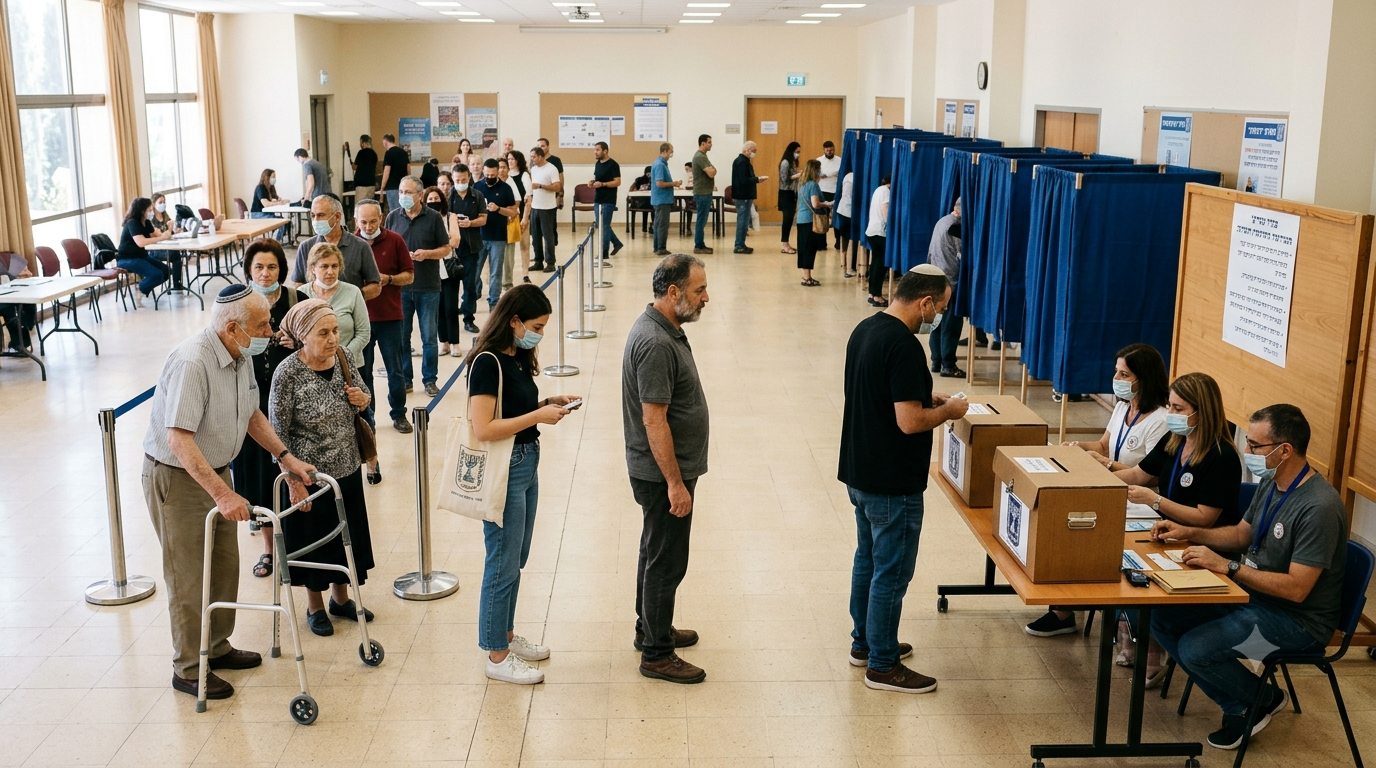
The global spotlight shines brightly on the Middle East as Israeli elections commence, marking a pivotal moment in the nation’s vibrant, often tumultuous, democratic journey. With polling stations now open across the country, incumbent Prime Minister Benjamin Netanyahu faces arguably the most significant challenge of his long political career, battling for his political survival against a determined and diverse opposition. This isn’t merely a domestic contest over local policies; its outcome is poised to generate profound implications for regional stability, international diplomatic relations, and the intricate balance of power across the Middle East. For a broad international audience, understanding the nuances and potential repercussions of these elections is not just fascinating, but crucial to grasping the broader geopolitical landscape and anticipating future developments.
The Stakes of Israeli Elections
Israel operates under a unique parliamentary system, a proportional representation model where citizens cast their ballots for political parties rather than individual candidates, except for a few specific roles. This electoral design almost invariably leads to a multi-party Knesset (parliament), where no single party typically secures an outright majority. Consequently, forming a governing coalition becomes a complex, often protracted, process involving intense negotiations between various political factions, each with its own ideological platform and demands. This inherent complexity elevates every election into a high-stakes affair, as even marginal shifts in public sentiment can dramatically reshape the political calculus and the potential composition of the next ruling government. The post-election period, characterized by strenuous alliance-building and consensus-seeking, is often as critical as the voting day itself, keeping both the nation and the international community in suspense.
A Veteran Leader’s Challenge: Benjamin Netanyahu
For well over a decade, Benjamin Netanyahu has stood as a towering, and often polarizing, figure in Israeli politics, serving a cumulative period as Prime Minister longer than any other in the nation’s history. His extensive political career has been characterized by assertive leadership, an unwavering focus on national security, and a robust defense of Israeli interests on the international stage. Yet, his prolonged tenure has also brought increasing public scrutiny, compounded by ongoing legal challenges and a growing appetite for fresh leadership among a significant segment of the electorate. This current election presents him with perhaps his most formidable battle yet, pitting him not only against established political rivals but also against the cumulative weight of political fatigue, calls for renewed ethical standards, and a widespread desire for a new national direction. This contest transcends mere policy debates; it serves as a profound referendum on his enduring leadership style and the future trajectory of the country.
Who are the Challengers?
The opposition bloc is a remarkably diverse amalgamation of political parties and movements, largely unified by a shared vision for a post-Netanyahu era. While specific names, such as former Chief of Staff Gadi Eisenkot, are prominent within this challenging front, the collective effort is broad-based, attracting support from centrist, left-wing, and even some disaffected right-wing factions. These groups generally contend that a change in leadership is imperative for rejuvenating Israel’s democratic institutions, enhancing social cohesion, and addressing pressing domestic issues. Their platforms often articulate promises of greater national unity, a renewed focus on the rising cost of living, improved public services, and a fresh, perhaps less confrontational, approach to Israel’s intricate security and diplomatic challenges. Their collective strength emanates from their appeal to voters earnestly seeking an alternative, one that promises a less divisive political climate and a pathway to a more stable future.

Why These Elections Resonate Globally
The outcome of Israeli elections has ripple effects far beyond its borders, making it a topic of intense global interest.
Regional Stability
Nestled in an inherently volatile region, Israel’s political leadership wields immense influence over the delicate balance of power in the Middle East. Decisions enacted in Jerusalem can directly shape ongoing peace processes, impact relations with the Palestinian Authority, influence interactions with neighboring Arab states, and play a crucial role in the broader geopolitical competition involving Iran and various non-state actors. A shift in leadership could potentially signal a significant pivot in foreign policy, possibly opening new avenues for dialogue and de-escalation, or, conversely, exacerbating existing tensions and creating new flashpoints. The international community, therefore, watches with bated breath to discern how the next Israeli government might navigate these critical, often existential, regional challenges.
International Diplomacy
Israel maintains exceptionally close strategic alliances with several global powers, most notably the United States, but also plays a substantial role in its relationships with European nations, emerging Asian economies, and various international bodies like the United Nations. The political leadership in power often dictates the specific tone, direction, and priorities of these crucial diplomatic ties. A new government might well recalibrate these relationships, potentially affecting everything from defense cooperation and intelligence sharing to trade agreements, cultural exchanges, and international peace initiatives. Consequently, global leaders and foreign ministries are intensely focused on who will ultimately be at the helm and what their specific foreign policy priorities will encompass.
Economic Implications
Beyond politics, the stability of Israel’s government carries tangible weight in global economic considerations. As a burgeoning hub for high-tech innovation and a significant player in the global economy, any internal political upheaval, prolonged instability, or substantial policy shift can ripple outwards, generating broader economic consequences. Investor confidence, established trade relationships, and even global energy markets can be indirectly influenced by the perceived stability and predictability of the Israeli government. A decisive election outcome, leading to a swift formation of a stable government, often sends a positive signal to international markets, whereas protracted political deadlock can introduce uncertainty and caution among global investors.
A Beacon of Democracy
Amidst a region frequently characterized by authoritarian governance and political repression, Israel stands out as a robust and vibrant democracy. Its ongoing electoral process, characterized by spirited public debate, genuine multi-party contestation, and a committed electorate, serves as an important, albeit sometimes challenging, case study for democratic resilience. How its established democratic institutions navigate intense political pressures, frequent leadership changes, and the often-complex transitions of power is observed meticulously by both established democracies and aspiring democratic nations worldwide. This scrutiny highlights both the inherent strengths and the occasional strains of electoral politics in a deeply complex geopolitical setting.
The Election Process and Beyond
On election day, citizens cast their votes at polling stations across the country. Once polls close, the counting begins, with initial exit polls often providing early indications of the outcome. However, due to the proportional representation system, the real drama unfolds in the days and weeks following the vote. This is when party leaders engage in intense coalition negotiations, attempting to piece together a governing majority. The President of Israel typically tasks the leader most likely to form a coalition with the mandate to do so. This period of political maneuvering is critical, as it determines who will ultimately lead the country and what policies will shape its future.
In sum, these Israeli elections are far more than an internal political exercise; they represent a momentous event on the global political calendar. As the nation diligently undertakes its democratic choice, the world watches with keen interest, acutely aware that the ripple effects of this decision will extend far beyond Israel’s immediate borders. Whether the outcome heralds a continuation of long-standing leadership or ushers in a new political direction, the path Israel chooses will undoubtedly influence the intricate tapestry of regional and international affairs for many years to come, shaping dialogues and policies across continents.
Source: original article