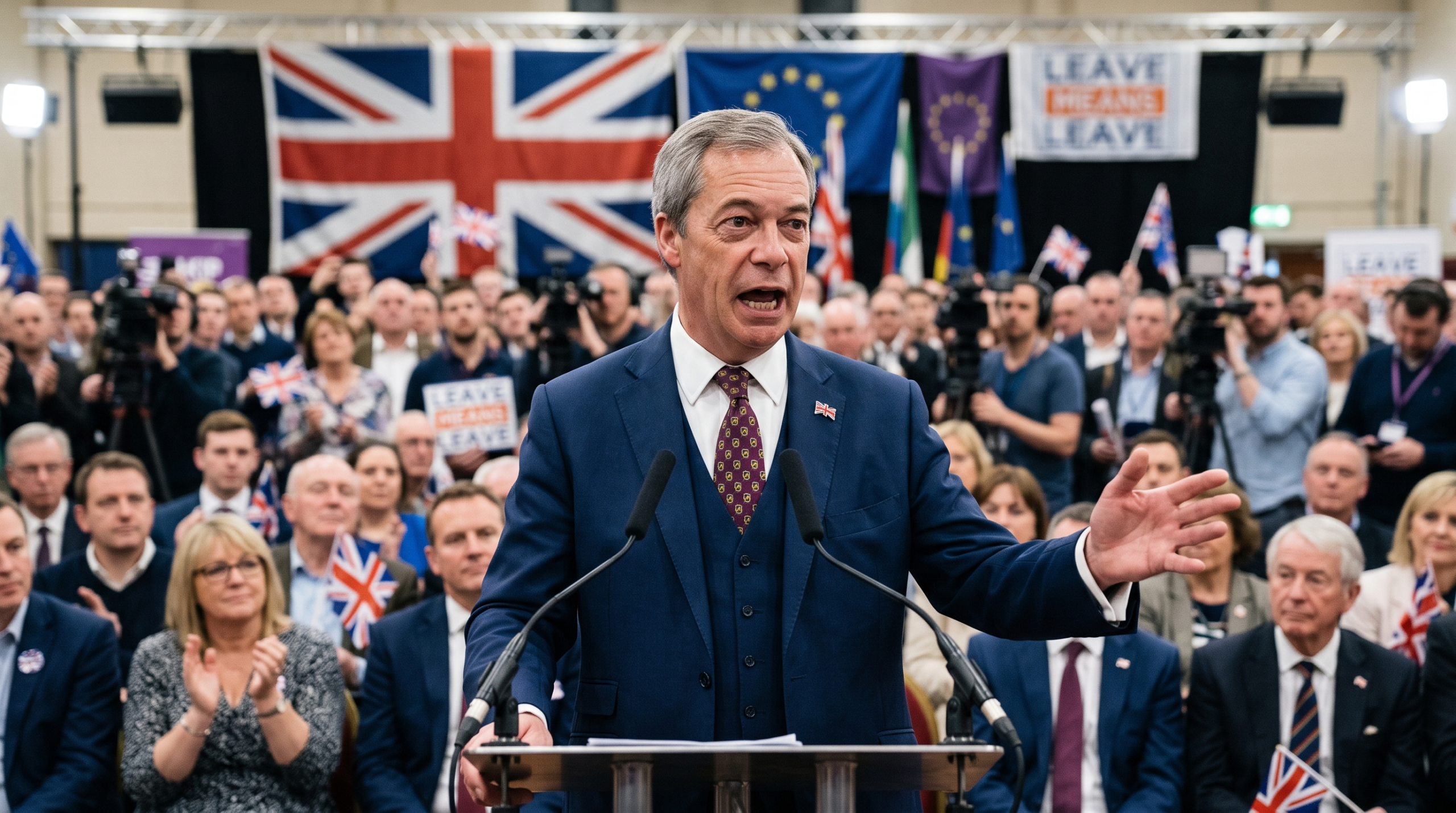
The recent Nigel Farage win in the Clacton by-election isn’t just a headline for British political junkies; it’s a seismic event with ripples felt across the international political landscape. For years, Farage has been a controversial yet undeniably influential figure, often described as the architect of Brexit. His latest electoral triumph, securing a seat back in the UK Parliament, signals a potential shift in the already tumultuous world of British politics and sends clear signals to populist movements worldwide. This isn’t merely a local victory; it’s a global story with far-reaching implications that demand our attention.
The Return of a Political Firebrand: Who is Nigel Farage?
To understand the significance of Farage’s return, it’s essential to recap his journey. Nigel Farage rose to prominence as the leader of the UK Independence Party (UKIP) and later the Brexit Party, becoming the most recognizable face of the campaign to leave the European Union. His plain-speaking style, often controversial remarks, and unwavering focus on national sovereignty resonated with a significant segment of the British electorate, particularly those feeling left behind by the political establishment.
Farage’s influence has extended beyond the UK. He has cultivated close ties with prominent international figures, most notably former U.S. President Donald Trump, often appearing at Trump rallies and offering commentary on American politics. This transatlantic connection underscores his role not just as a British politician, but as a key player in the broader global populist movement. His ability to tap into public dissatisfaction with traditional politics, immigration policies, and globalism has made him a template for similar movements in other countries.
Despite his electoral successes in European Parliament elections, securing a seat in the UK’s House of Commons had long eluded him. His latest attempt, in the Clacton by-election, was his eighth bid for a Westminster seat, marking a determined return to the heart of British legislative power.
The Global Significance of the Nigel Farage Win in Clacton
The Clacton by-election itself was a fascinating spectacle, not least because of some of Farage’s more eccentric rivals, including the satirical candidate Count Binface. However, beneath the surface of the unusual, this election carried profound political weight. Clacton, a coastal town in Essex, has historically been a bellwether for working-class sentiment and a strong pro-Brexit area. Farage’s decision to contest this seat was strategic, aiming to consolidate support where his message resonated most deeply.
Why Clacton?
- Symbolic Significance: Clacton was the first constituency to elect a UKIP MP back in 2014, making it a spiritual home for the populist, anti-establishment movement in the UK.
- Strong Support Base: The area has a demographic that aligns well with Farage’s core voter base: those concerned about immigration, traditional values, and a perceived disconnect from London-centric politics.
- A Platform for Reform UK: Farage’s victory provides a critical parliamentary platform for his current party, Reform UK, giving them an unprecedented voice within Westminster ahead of a looming general election.
This win isn’t just about one man returning to Parliament; it’s about the re-energizing of a specific brand of right-wing populism in Britain. It forces mainstream parties, particularly the Conservative Party, to reassess their strategies and address the concerns that Farage so effectively capitalizes on. For international observers, it offers a real-time case study of how populist figures can re-establish their political relevance even after periods out of the direct political spotlight.

Implications for UK Politics and Beyond
Farage’s return is poised to significantly impact the UK’s political landscape. His party, Reform UK, has been steadily gaining traction in opinion polls, often at the expense of the ruling Conservative Party. With a general election expected within months, Farage’s presence in Parliament will undoubtedly amplify Reform UK’s message and potentially split the right-wing vote, posing a serious challenge to Conservative incumbents.
Immediate and Long-Term Consequences:
- Conservative Party Pressure: Farage’s re-entry puts immense pressure on the Conservatives to adopt more hardline policies on immigration and cultural issues, in an attempt to win back voters flocking to Reform UK.
- Shaping the Election Narrative: His voice in Parliament will ensure that issues like immigration, Brexit’s impact, and critiques of the political establishment remain central to the election debate, potentially forcing other parties to engage on his terms.
- A Boost for Populist Movements: Internationally, Farage’s success will be watched closely by other populist leaders and parties. It offers a narrative of resilience and re-emergence, potentially emboldening similar movements across Europe and North America that champion national sovereignty and anti-establishment sentiments.
For a global audience, the UK often serves as a barometer for broader Western political trends. The rise of populism, the fracturing of traditional party loyalties, and the enduring power of charismatic figures like Farage are phenomena not unique to Britain. Observing how the UK political system responds to this challenge can provide valuable insights into the future of democratic governance in an increasingly polarized world.
What This Means for a Global Audience
Beyond the immediate political machinations, Farage’s return has broader implications:
Firstly, it highlights the enduring appeal of anti-establishment rhetoric. In an era of economic uncertainty and rapid social change, many citizens globally feel unrepresented by mainstream politicians. Farage’s ability to articulate these frustrations, however controversially, resonates far beyond the UK.
Secondly, it underscores the fragility of traditional political parties. The Conservative Party’s struggle to contain the rise of Reform UK mirrors challenges faced by established parties across the Western world, as voters increasingly seek alternatives outside the conventional two-party system.
Finally, Farage’s strong ties to figures like Donald Trump mean his re-entry into the UK Parliament has geopolitical undertones. It reinforces a network of right-wing populist leaders who, while operating in different national contexts, share similar ideologies and often support each other. This interconnectedness means a victory for one can be seen as a morale boost for others, potentially influencing global policy directions and alliances.
Nigel Farage’s victory in Clacton is far more than a local news story. It’s a powerful reminder of the persistent, evolving nature of populism and its capacity to reshape national and international politics. As the UK gears up for a general election, the world will be watching to see how this political veteran leverages his new platform, and what it ultimately signifies for the future of democracy in an age of discontent. His return is a testament to the fact that in politics, as in life, some figures simply refuse to fade away, continuing to challenge the status quo and demand attention on the global stage.
Source: original article