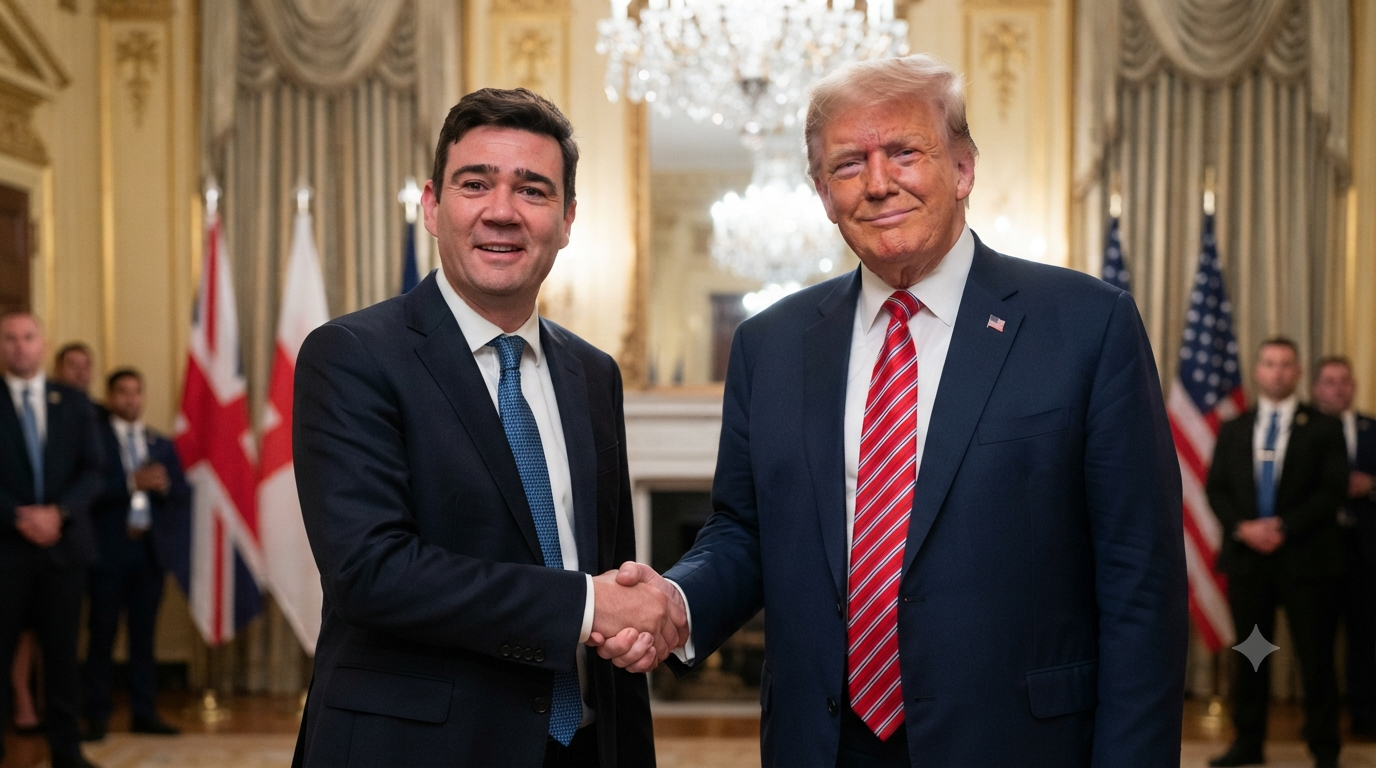
The recent Burnham Trump meeting has sent ripples through international diplomacy, marking a crucial moment for global politics and future alliances. When a newly appointed British Prime Minister sits down with a former—and potentially future—US President known for his unpredictable style, the world watches with bated breath. This encounter was more than just a formal introduction; it was a crucial test of leadership, a complex negotiation of personalities, and a significant indicator of the trajectory for one of the world’s most enduring ‘special relationships.’ While initial reports suggest a relatively smooth sailing for Andy Burnham, keen observers are already pointing to the subtle ‘cracks’ that emerged, hinting at future challenges.
The First Impression: A Diplomatic Dance
For many, the primary concern leading up to this high-stakes meeting was the potential for fireworks. Donald Trump is renowned for his unfiltered rhetoric and his tendency to dominate any room he enters. Against this backdrop, Andy Burnham, the new occupant of 10 Downing Street, faced the formidable task of establishing rapport and projecting strength without alienating a key global figure. The initial readouts were, by most accounts, a sigh of relief. Trump himself offered praise, reportedly calling Burnham a ‘natural business person’ – a compliment from a man who values deal-making above almost all else.
This positive framing from Trump, however superficial, is a significant win for Burnham. It suggests that the British PM managed to navigate the notoriously complex Trumpian landscape without any major diplomatic faux pas or public outbursts. In the world of international relations, sometimes simply avoiding a public spat is a victory in itself. For a new leader, securing even a lukewarm endorsement from Trump can offer a valuable boost to domestic and international standing, demonstrating an ability to engage with diverse global leaders effectively.
Burnham’s Steady Hand in the Spotlight
Burnham’s approach appears to have been one of measured diplomacy. Rather than confronting Trump head-on, he seems to have opted for a strategy of calm engagement, allowing Trump to take center stage while quietly asserting British interests. This ‘boredom but no temper tantrums’ assessment from some quarters might sound underwhelming, but for seasoned diplomats, it signals a leader capable of maintaining composure under pressure. It reflects a tactical choice to prioritize stability over immediate dramatic wins, understanding that the long game of international relations requires patience and strategic positioning.
Such an approach is vital for the UK, especially as it seeks to redefine its global role post-Brexit and navigate a turbulent geopolitical landscape. Burnham’s ability to maintain a steady hand in this initial encounter sets a precedent for how his administration might handle future interactions with unpredictable global players, signaling a preference for pragmatism over provocation.
Understanding the Burnham Trump Meeting Dynamics
Beneath the surface of pleasantries and initial praise, the Burnham Trump meeting also revealed significant points of friction, or ‘cracks,’ as some analysts have described them. While the headlines focused on the lack of overt conflict, the details emerging from inside the meeting room point to areas where British and American interests, or at least the perceptions of those interests, diverge sharply. Understanding these dynamics is crucial for grasping the true implications of this encounter.

The Island Dispute: A Sticking Point
Perhaps the most significant flashpoint came with Trump’s unexpected criticism of the UK’s long-standing deal concerning the Indian Ocean islands. While the specific details of the ‘deal’ are complex and historically charged, Trump’s intervention highlights a broader issue: the potential for a future US administration to openly challenge British foreign policy and sovereign decisions. For a global audience, this is a stark reminder that even the closest allies can face public disagreement on sensitive matters.
The Indian Ocean islands, particularly the Chagos Archipelago, have been a contentious issue for decades, involving questions of colonial legacy, international law, and strategic military importance (such as the US base at Diego Garcia). Trump’s comments, however casually delivered, inject a highly sensitive issue into the public discourse, potentially emboldening countries that contest the UK’s claim. This unsolicited critique is not just about a remote island chain; it’s about the sanctity of bilateral agreements and the limits of allied support, sending a signal that future US engagement might come with more public scrutiny and less traditional deference.
Beyond the Handshake: What It Means for Global Alliances
The implications of this meeting extend far beyond the immediate interaction between Burnham and Trump. For global alliances like NATO and the broader network of Western democracies, the nature of the UK-US relationship remains paramount. A stable, predictable ‘special relationship’ has historically been a cornerstone of international security. Any perceived instability or public disagreement between London and Washington can be exploited by rival powers and create uncertainty among other allies.
Moreover, the meeting serves as a dress rehearsal for what might come if Trump returns to the White House. Burnham’s ability to navigate this initial test provides valuable lessons for other world leaders who may soon find themselves in similar positions. It underscores the need for strategic foresight, a deep understanding of Trump’s negotiating style, and the capacity to protect national interests even when faced with unexpected challenges from allies.
Looking Ahead: Navigating a Complex Future
The path forward for Andy Burnham and UK-US relations is undoubtedly complex. While the immediate objective of avoiding a public diplomatic disaster was met, the underlying tensions revealed by Trump’s remarks about the Indian Ocean islands cannot be ignored. These ‘cracks’ suggest that future interactions may not be as smooth, especially if contentious issues surrounding trade, defense spending, or geopolitical alignments come to the fore.
Burnham’s administration will need to carefully balance the need to maintain a strong relationship with the US, regardless of who is in the Oval Office, with the imperative to assert British sovereignty and pursue its own foreign policy objectives. This delicate act of diplomacy will require both firmness and flexibility, ensuring that the UK can navigate the complexities of a rapidly changing global order while safeguarding its national interests.
Conclusion
The first Burnham Trump meeting can be viewed as a qualified success for the new British Prime Minister. He successfully passed the immediate ‘Trump test,’ demonstrating a capacity for calm and measured diplomacy in a potentially volatile situation. Trump’s positive remarks, however fleeting, offer a useful foundation. Yet, the public critique regarding the Indian Ocean islands serves as a potent reminder that the ‘special relationship’ is not immune to public disagreements and underlying tensions. As the world continues to grapple with shifting power dynamics, this meeting offers crucial insights into the evolving landscape of international diplomacy and the delicate balance required to maintain key alliances in an era of unpredictable leadership.
Source: original article