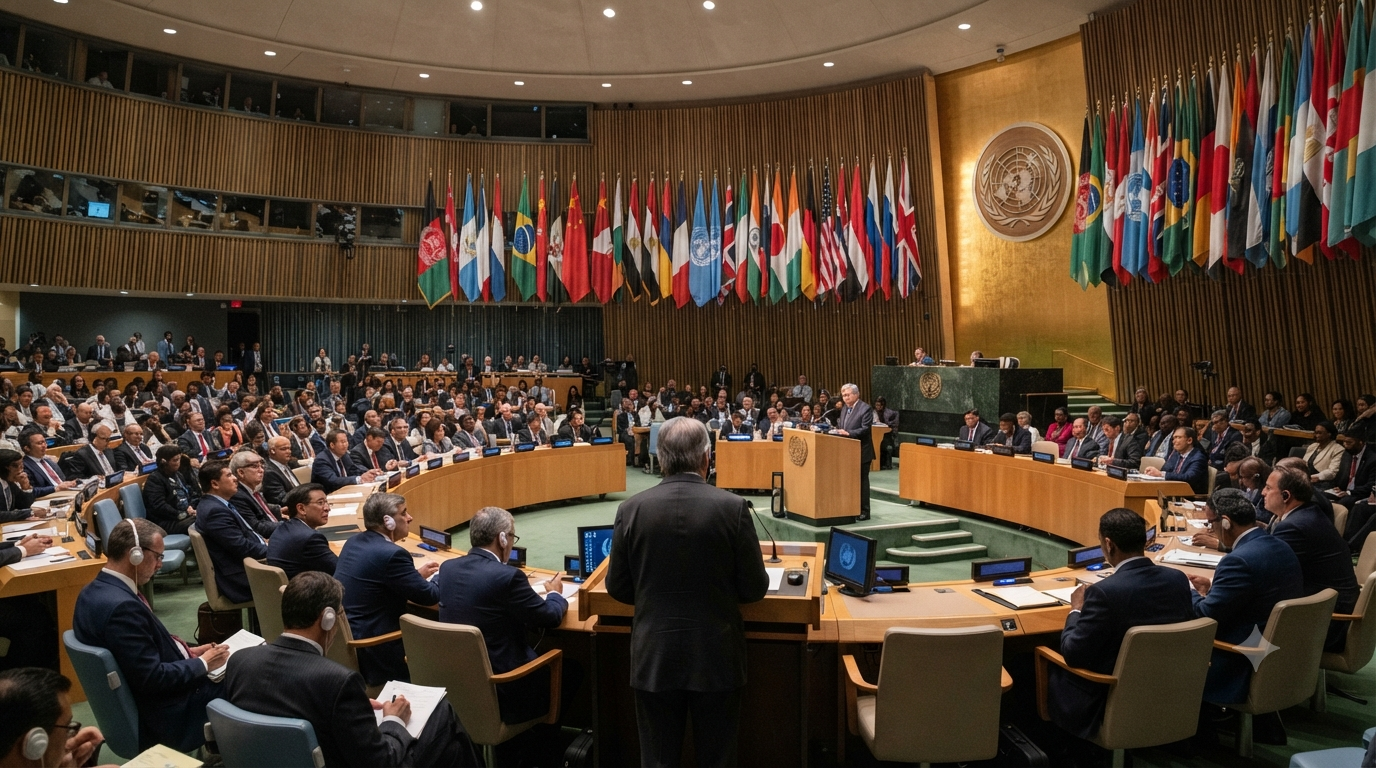
The intricate dance of US Iran relations recently took center stage on the global stage, marked by a blend of strong rhetoric and subtle diplomatic signals that left many observers scratching their heads. Former President Trump’s remarks at the United Nations, where he publicly stated the capability to ‘annihilate’ Iran while simultaneously expressing an expectation for a deal post-midterm elections, encapsulated a long-standing paradox in international diplomacy. This isn’t just about two nations; it’s a narrative that impacts global stability, energy markets, and the future of international agreements, making it critical for a broad audience to understand the underlying currents.
The Power of Words: ‘Annihilate’ and its Echoes
When a former leader of a global superpower uses a term as stark as ‘annihilate’ on an international platform like the United Nations, it sends shockwaves. Such rhetoric is rarely just for the ears of the intended adversary. Instead, it serves multiple purposes, often simultaneously addressing domestic political bases, international allies, and, of course, the target nation itself. For a domestic audience, particularly those who favor a tough stance on foreign policy, it can signal strength and resolve. For allies, it might be a reassurance of commitment, or, conversely, a cause for concern regarding potential escalation. And for Iran, it’s a clear warning, designed to exert pressure and perhaps even provoke a reaction.
However, the immediate context of such threats is crucial. These aren’t isolated outbursts but are often part of a broader, more calculated strategy. The history between the US and Iran is fraught with tension, mistrust, and proxy conflicts. From the 1979 revolution to the complex negotiations surrounding the Joint Comprehensive Plan of Action (JCPOA), also known as the Iran nuclear deal, the relationship has been anything but straightforward. Understanding this deep-rooted history is essential to interpreting current statements, as they often draw upon a long narrative of perceived grievances and strategic maneuvering.
Navigating the Complexities of US Iran Relations
Despite the fiery rhetoric, the mention of a ‘deal after the midterm elections’ introduces a layer of diplomatic possibility that often goes unnoticed amidst the headlines. This phrase suggests a linkage between domestic political cycles and international policy, implying that the timing of a potential agreement might be influenced by internal political considerations. For international observers, this highlights the intricate interplay between a nation’s internal politics and its external actions. It posits that tough talk might be partly performative, a way to position oneself strongly before entering into negotiations, or to rally support at home.
The very idea of a ‘deal’ after such strong threats underscores the core principle of diplomacy: even the most antagonistic relationships often involve back-channel communications and the eventual search for common ground. This isn’t necessarily a contradiction but rather a reflection of a nuanced approach where public posturing coexists with private overtures. For global stability, this dynamic is incredibly important. It means that even when tensions are at their highest, the door to dialogue, however narrow, is often kept ajar.
The Role of Back-Channel Communications and Diplomacy
The news reports also alluded to meetings between US and Iranian officials, even shortly after the ‘annihilate’ warning. This is a classic example of what is often called ‘track-two diplomacy’ or ‘back-channel communications.’ These are informal, unofficial contacts between representatives of opposing groups or nations. They serve as crucial valves during periods of high tension, allowing for the exchange of messages, clarification of intentions, and the exploration of potential solutions without the public scrutiny and pressure that accompanies official negotiations.
Such interactions are vital because they can:
- De-escalate tensions: By providing a direct line of communication, misunderstandings can be clarified, and unintended escalations can be avoided.
- Test the waters for official talks: Informal meetings can gauge the willingness of both sides to engage in more formal negotiations and identify potential areas of agreement.
- Build trust (slowly): Even minor positive interactions can begin to build a fragile foundation of trust, which is essential for any long-term resolution.
- Circumvent public constraints: Leaders might be able to discuss more sensitive topics or make proposals in private that would be politically impossible to articulate publicly.
The existence of these meetings, even if informal, suggests that despite the public declarations, both sides recognize the need to manage the relationship and keep lines of communication open. This is a testament to the enduring, albeit often hidden, efforts of diplomacy in preventing outright conflict.

Global Implications: What This Means for You
Why should a global audience care about the seemingly contradictory statements regarding US Iran relations? The answer lies in the far-reaching impact of Middle Eastern stability. Iran is a significant player in a region vital for global energy supplies and has influence across various proxy conflicts, from Yemen to Syria. Any major escalation, or even perceived instability, in the Gulf region can have immediate and dramatic effects:
- Oil Prices: A significant portion of the world’s oil transits through the Strait of Hormuz. Threats to this passage, or any conflict in the region, can send global oil prices skyrocketing, impacting economies worldwide.
- Regional Conflicts: Iran’s involvement in regional conflicts means that any direct confrontation with the US could rapidly destabilize an already volatile area, leading to humanitarian crises and refugee flows.
- Nuclear Proliferation: The future of the Iran nuclear deal remains a critical concern. Any moves that push Iran closer to developing nuclear weapons would trigger widespread international alarm and potentially a regional arms race.
- International Law and Norms: The way powerful nations engage with others sets precedents for international law and diplomatic norms. The use of threats, alongside calls for deals, shapes how future international disputes might be managed.
For individuals and businesses across the globe, these geopolitical maneuvers translate into tangible impacts, from the cost of fuel to the security of international trade routes and the broader climate of global peace.
The Enduring Paradox
The recent statements regarding US Iran relations perfectly encapsulate the enduring paradox of international diplomacy: the simultaneous deployment of hard power rhetoric and the quiet pursuit of negotiation. It highlights a world where leaders must balance domestic political pressures with international strategic imperatives, often resulting in mixed signals that are difficult for the public to decipher.
As we move forward, the key will be to look beyond the headlines and understand the multifaceted nature of these interactions. While the threats are real and the potential for conflict remains, the underlying signals of a willingness to engage, however cautiously, offer a sliver of hope for a diplomatic resolution. The international community, and indeed every global citizen, has a vested interest in watching these developments closely, for their ripples will be felt far beyond the immediate borders of the involved nations.
Source: original article